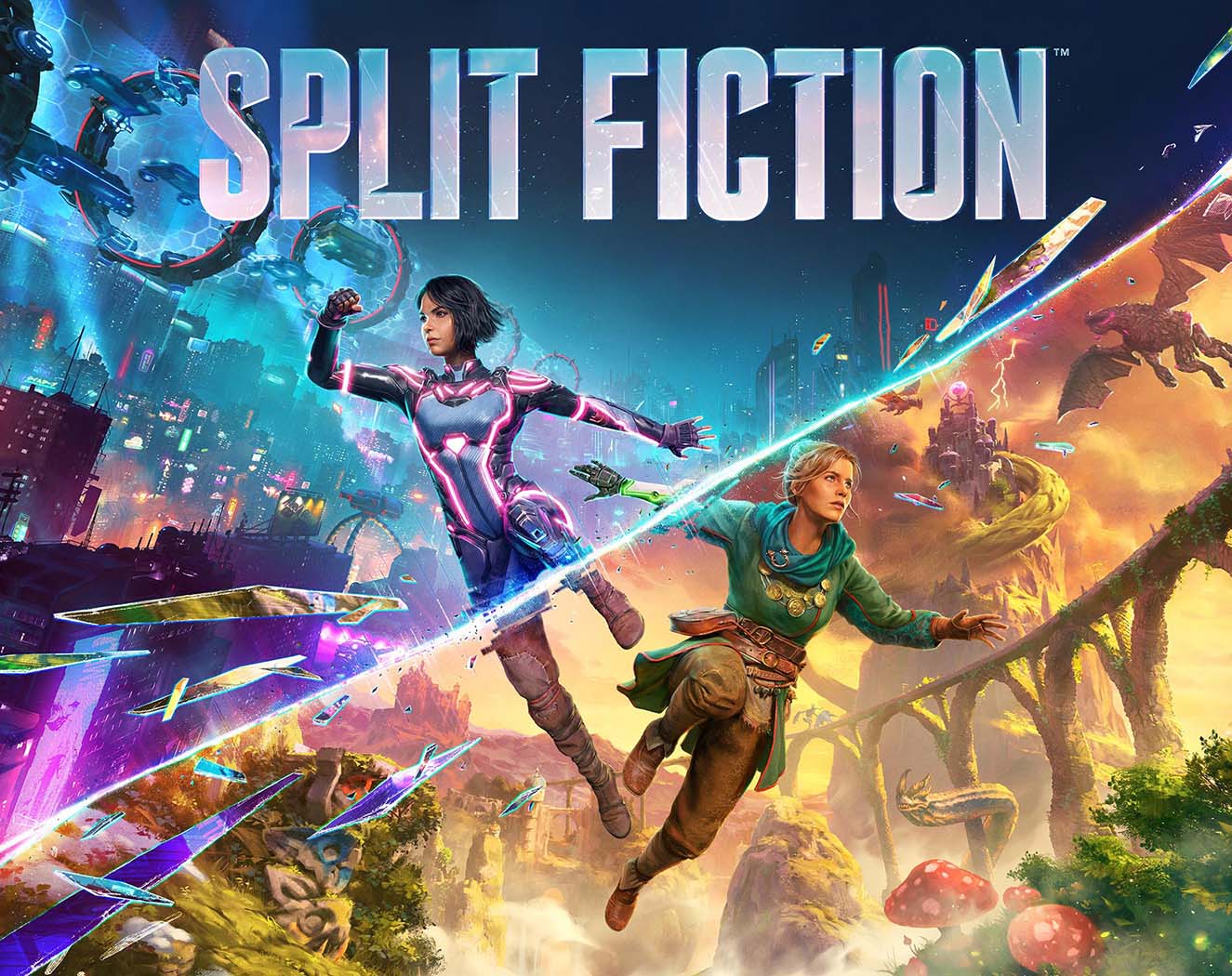
“Split Fiction: A Tale of Interwoven Worlds”
Night falls, and I stand in the center of a city torn apart by a jagged rift. On my left, a brightly lit modern district lies deserted; on my right, vines crawl over ancient ruins, as if time itself has stopped. The air feels split, even sounds echo subtly between the two worlds. I touch the device in my hand, and in an instant, the world flips—light and shadow misalign, space overlaps, and the ground beneath me seems to reconfigure. Roads that were once blocked silently stretch open.
At that moment, I realized: in “Split Fiction”, the concept of “world” is never fixed—it can be understood, manipulated, and even reconstructed.
This is the core of the game: an immersive puzzle-adventure centered around “dual-world switching”. Players constantly traverse between reality and the “Shadow Realm,” observing details, reasoning through logic and spatial relationships, gradually solving puzzles while piecing together the hidden truths behind the worlds.
1.The Rules of Dual Worlds: Beyond Mere Visual Differences
In “Split Fiction”, the two worlds are not merely stylistic contrasts; they are fundamentally two distinct spatial systems with completely different rules, yet mapped to each other and mutually influential.
- The Real World represents order and rules: everything obeys physical intuition and rational design. Walls are walls, roads are roads, closed paths cannot be crossed, and mechanisms must be triggered through clear steps. It provides certainty—I can predict outcomes, but I am also constrained.
- The Shadow Realm feels more like a psychological projection space. Structures are not absolutely stable:
- Buildings may extend in impossible directions.
- Floors may visually break but remain walkable.
- Nonexistent paths may appear through “connections.”
More importantly, changes in the Shadow Realm are rarely random; they follow emotional logic or symbolic meaning. A blocked area may symbolize repression, thus opening a passage in the Shadow Realm; a broken bridge may represent fractured relationships but is connected by some mysterious energy in the Shadow Realm.
This contrast creates a unique puzzle-solving approach: I cannot rely solely on “real-world logic,” nor can I trust the Shadow Realm entirely. I must connect the two worlds in my mind.
The worlds are not isolated—they have structural mappings:
- A change in one world can trigger a chain reaction in the other.
- Some mechanisms are visible only in one world but affect both.
- Spatial locations correspond, but traversal methods differ entirely.
This requires constructing a “dual-layer mental map”:
Not just memorizing paths, but understanding what each location means in both worlds.
As the game progresses, this cognitive load transforms into a skill—I begin to naturally associate one scene with its counterpart, even predicting what will happen after a world switch.
Thus, switching worlds becomes more than an action; it is a shift in thinking:
- From linear thought to multi-layered spatial understanding.
- From finding paths to constructing paths.
This rule-based design keeps the puzzle experience fresh and deep. Players are not simply solving fixed puzzles—they are learning, adapting, and mastering a unique set of world rules.
2.Core Gameplay Deepening: From Observation to Spatial Reconstruction
In the early stages, I relied mostly on intuition—faced with a barrier or broken road, I instinctively switched worlds, trying to find a detour. But as I progressed, puzzles became more complex, requiring strategic thinking and planning across both worlds.
The core gameplay revolves around a world-switch → observe → act loop, but the depth lies in managing two distinct spatial rule sets simultaneously. Each switch alters paths or triggers hidden mechanisms, often in non-linear ways, requiring foresight and planning.
I had to learn prediction and combinatorial thinking:
- Observe in reality: assess walls, floors, mechanisms, and paths for possible Shadow Realm utilization.
- Construct in the Shadow Realm: extend, complete, or distort structures to turn blocked areas into traversable routes.
- Return to reality: move along pre-planned paths, trigger mechanisms, or traverse previously impassable areas.
Advanced puzzles involve multi-step switching. Some paths exist only across several switches:
- Extend a staircase in the Shadow Realm, then fix it in reality via a mechanism.
- Activate a switch in reality to make platforms appear in the Shadow Realm, bridging gaps.
- Some mechanisms require careful attention to both timing and switching logic; otherwise, paths disappear.
This elevates puzzle-solving from mere exploration to spatial reconstruction. I am no longer passively exploring; I am actively reconfiguring the world to create my own path. Each successful chain of actions brings the satisfaction of creative control—not just solving puzzles, but redesigning the space itself.
Eventually, this gameplay cultivates a unique mindset: I mentally overlay the two worlds, predict switch outcomes, and plan multi-step action sequences. From observation to construction, “Dual Shadows” challenges not only intelligence but spatial perception and creativity.
3.Rhythm and Pressure: Dynamic Puzzle Experience
The game’s appeal is not just in puzzle complexity—it finely balances rhythm and psychological tension. Puzzles are dynamic: time limits, continuous actions, and evolving environments force thinking and execution to intertwine.
Time-sensitive mechanisms:
- Some switches or paths exist only briefly after switching worlds, requiring rapid action to trigger subsequent steps.
- Dynamic obstacles: Shadow Realm structures may move, vanish, or extend unexpectedly, demanding real-time path reassessment.
- Chain operations: Complex puzzles require multiple switches and actions in sequence; a single delay may invalidate the solution.
This design imbues the puzzles with tension and urgency. I am constantly cycling between thinking, acting, and rethinking. Each switch is a beat, each movement a pulse. Success brings exhilarating satisfaction; failure prompts deeper understanding of world interactions.
The combination of rhythm and pressure ensures that every moment feels immersive, where puzzle-solving is not just intellectual but a game against time, space, and reflexes.
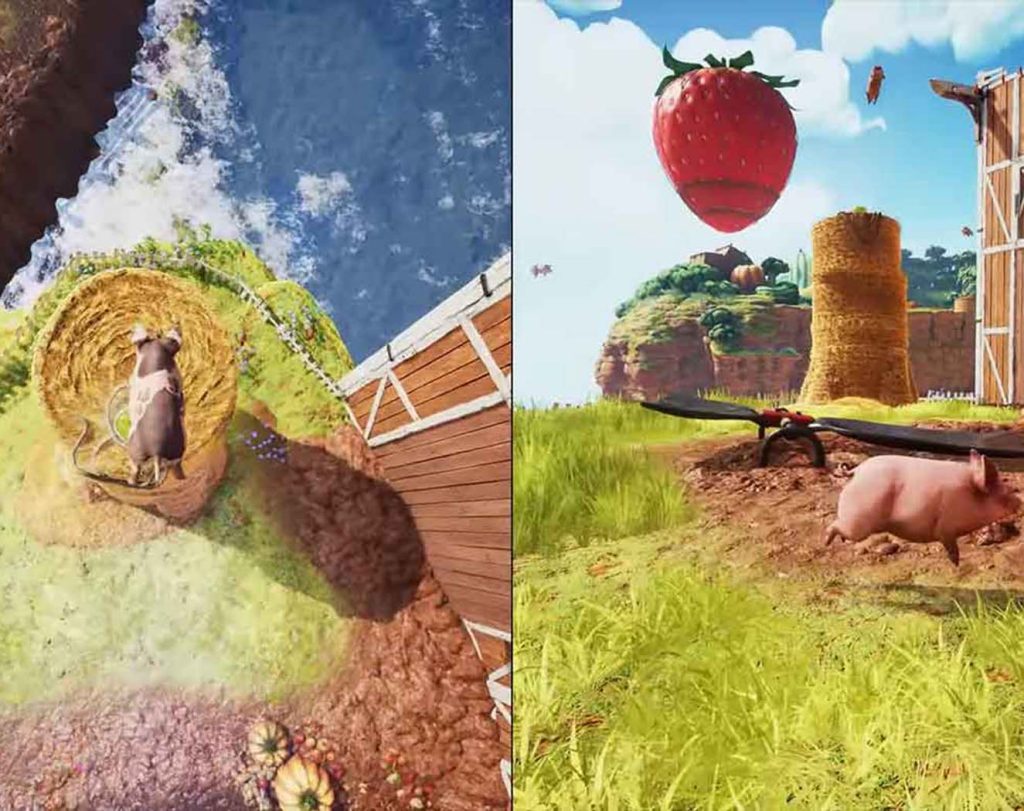
4.Environmental Storytelling: Two Worlds, One Truth
“Split Fiction” abandons traditional dialogue or text-heavy storytelling. Instead, the story unfolds through environmental clues and spatial design. Exploration is itself a form of narrative decoding.
Reality shows the results and surface:
- Scattered tools and ruins hint at past civilizations or experiments.
- Stopped clocks, abandoned stations, and cracked buildings convey consequences.
- Human traces—empty classrooms, forsaken transport—evoke the emptiness left by disrupted history.
The Shadow Realm mirrors emotion and subconscious:
- Distorted spaces, tilted walls, floating steps symbolize chaos and psychological pressure.
- Repetitive or illogical room layouts convey loneliness, confusion, or anxiety.
- Symbolic signs, light cues, and strange mechanisms hint at motives, experimental intent, or disaster causes.
By combining reality’s outcomes with Shadow Realm emotions, the story emerges:
- A city collapses due to an experiment or disaster.
- Human or scientific intervention tried to control uncontrollable forces but failed.
- The rift between worlds represents not only spatial breaks but fractures in time and memory.
Players become active decoders: reconstructing fragments, deducing cause and effect, and understanding hidden truths. Each world switch or path unlock is participation in storytelling, fusing narrative and puzzle seamlessly.
5.Atmosphere: Extending Solitude and the Unknown
Atmosphere is central to the experience. “Split Fiction” conveys deep solitude: no companions, no constant dialogue, only interaction with the environment. Every step feels like a conversation with the world itself.
Reality:
- Empty streets, abandoned buildings, and frozen vehicles create a time-stilled city.
- Sounds—wind, rain, water reflections, faint machinery—become amplified in silence.
- Quietness emphasizes the weight of each action.
Shadow Realm:
- Spaces breathe and shift; walls and floors distort slightly with each switch.
- Twisted light and architecture create uncertainty and illusions.
- Strange symbols, floating objects, and hidden paths heighten suspense and vigilance.
Alternating atmospheres establish a unique exploration rhythm: familiarity versus strangeness, rationality versus uncertainty. Switching worlds becomes a psychological experience, constantly keeping players on edge.
The interplay of solitude and the unknown turns the player into a witness to the world, perceiving both space and emotion deeply.
6.Growth Experience: From Confusion to Mastery
The game shines not only in puzzle design but in cognitive growth—a journey from confusion to control.
Initial confusion:
- Broken paths, distorted structures, and unclear rules overwhelm me.
- Shadow Realm feels unstable; reality appears intuitive but restrictive.
- Intuition-driven trial-and-error dominates.
Gradual understanding:
- I learn patterns: which structures extend in Shadow Realm, which mechanisms trigger cross-world effects.
- I predict spatial changes, combine multiple actions, and plan sequences.
- Failure becomes training in spatial perception and logic.
Mastery:
- I actively construct paths using rules.
- Complex scenes are mentally solved: Shadow Realm extensions, reality triggers, switch timing, and action sequences fully planned.
- Puzzles shift from external challenges to tests of self-ability.
This growth is not numerical but cognitive and strategic:
- From environment-driven to environment-utilizing.
- From trial-and-error to prediction and planning.
- From fragmentary perception to holistic understanding.
Every puzzle solved reflects a deepening understanding of dual-world logic, making the adventure not just about problem-solving, but self-evolution.
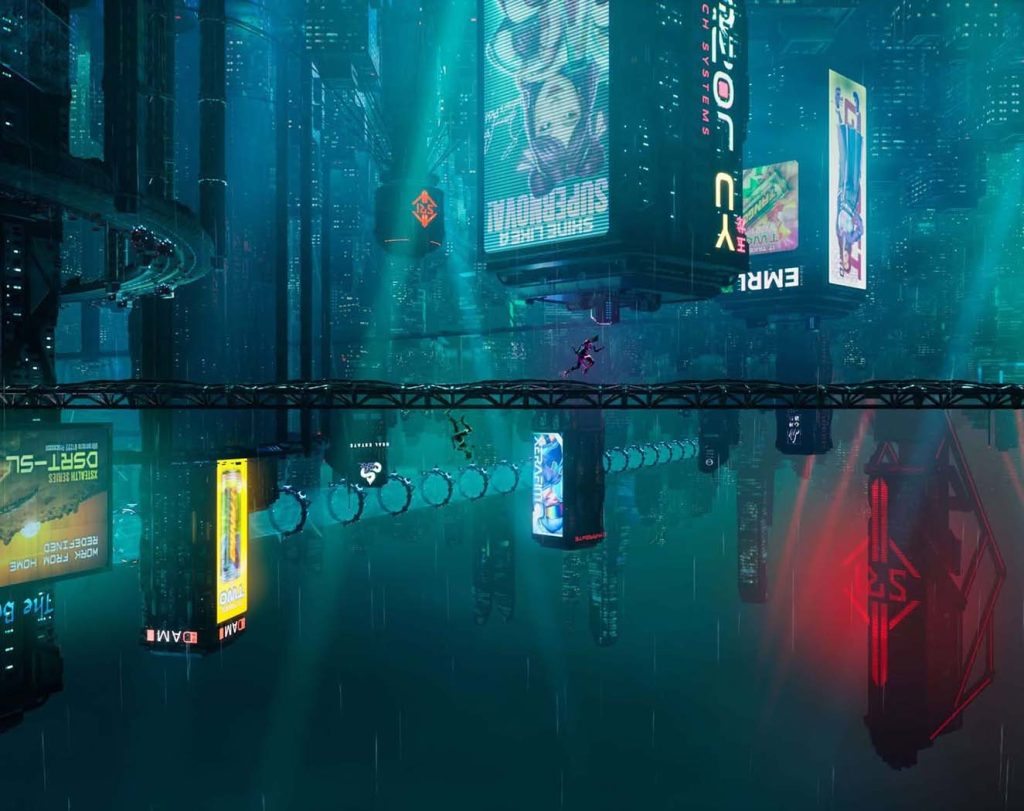
7. Platform Recommendations: Diverse Experiences and Immersion
“Split Fiction” supports multiple platforms to deliver immersive puzzle-adventure experiences anywhere:
PC (Steam): High resolution and framerate highlight world details and facilitate complex path planning.
PlayStation 5 / 4: Stable performance and immersive visuals; precise controller input for world-switching and chain mechanisms.
Nintendo Switch: Excellent portability; supports handheld and docked play, suitable for fragmented or continuous sessions.
No matter the platform, the dual-world charm is fully realized—switching, interacting with mechanisms, environmental storytelling, and sensing psychological pressure. Choose the device that best fits your play style for maximum immersion.
“Split Fiction” combines dual-world switching, spatial design, logical reasoning, and environmental storytelling. It does not rely on combat or fast-paced action but challenges players through rules and structure.
Every puzzle tests cognition; every switch redefines the world.
For those who enjoy thinking, observing, and understanding, “Split Fiction” is not just a puzzle-adventure—it is a journey in how to perceive and interact with the world itself.