Don’t Starve: Explore the Unknown Wilderness and Experience the Thrilling World of Extreme Survival
When I wake up, I find myself in an unknown and desolate wilderness. The sky above is heavy and ominous, with thick clouds that seem ready to unleash a downpour at any moment. The ground beneath my feet is hard and uneven, while the grass rustles in the wind as if quietly warning me of impending danger. In my hands, I hold only a worn-out twig and some grass. I know that here, no one will come to help. Survival, from this moment on, depends entirely on me—every breath, every movement is a test of wisdom and courage.
Don’t Starve is a uniquely immersive survival adventure game that perfectly combines resource management, strategic thinking, environmental exploration, and the spirit of adventure. In this wild world, every second is filled with the unknown and danger: hunger silently approaches, cold winds bite, monsters lurk in the darkness of night, and sudden natural disasters can destroy the food and supplies I have painstakingly collected. Every decision could mean life or death: should I venture into the forest to gather berries and hunt, or take shelter by the river during a storm? Should I craft a makeshift weapon for defense or set traps to catch food and survive?
Unlike traditional survival games, Don’t Starve challenges not only reflexes but also strategic thinking and long-term planning. I must constantly observe changes in the environment, remember resource locations, assess monster threats, and manage my hunger, health, and sanity. The day-night cycle and seasonal changes further increase the survival difficulty: the freezing cold of winter can paralyze my actions, the summer heat can spoil my food, and muddy rainy seasons can hinder movement. Every environmental factor forces me to continuously adapt my strategy.
In this wilderness, there are no shortcuts. Every fire I light, every tool I craft, every confrontation with monsters makes the urgency of survival tangible. At the same time, Don’t Starve is full of fantastical elements: mysterious creatures may hide deep in the forest, strange lights occasionally flicker in the night sky, and rivers and lakes may conceal undiscovered resources. It is both a harsh challenge and a heart-pounding adventure; each exploration could bring surprises or deadly threats.
In the world of Don’t Starve, I learn caution, patience, and creativity. Every act of gathering resources, building shelter, and planning my actions lets me feel the real pressure of wilderness survival and its endless allure. This is not just a survival game—it is an immersive journey of wisdom, courage, and exploration into the unknown.
1. The Tension of Extreme Survival
In Don’t Starve, each day is a life-or-death test. I must quickly gather grass, twigs, berries, and mushrooms, crafting basic tools, traps, and torches. Every fire I light is a fragile barrier that temporarily keeps night terrors at bay, but monsters and lurking shadows could pounce at any moment. The wind, rustling leaves, and distant wolf howls all make my heartbeat quicken. Hunger is the greatest pressure—I must constantly search for food while maintaining body temperature and sanity, or death could strike at any time.
The survival mechanics are deeply detailed: the day-night cycle forces me to plan my schedule wisely—gather and explore during the day, return to a safe zone and light a fire at night. Hunger and sanity systems constantly make me assess my physical and mental state. Seasonal changes and weather add unpredictability: winter’s freezing winds can immobilize me, summer’s scorching sun can spoil food, and storms may destroy my hard-built shelters.
Every decision requires weighing risk against reward: should I risk venturing into the forest for berries, or stay put to stockpile supplies? Should I fight monsters head-on or cleverly use traps to my advantage? A single mistake can lead to food shortages, sanity collapse, or death; a smart strategy can allow me to survive the night and continue living.
This high tension makes every moment weighty. Even just lighting a campfire and watching its flickering flames in the dark, I feel the fragility of life and the thrill of survival. Each extended moment of life makes my pulse race—here in the wilderness, every breath and movement is the essence of extreme survival.
2. Exploring the Unknown Wilderness and Adventure World
The wilderness is far more complex and dangerous than I imagined. Every step into an unknown area could bring new creatures, terrain, or hidden resources. I must carefully observe the environment and plan routes using natural obstacles: dense forests provide cover and ambush opportunities, but lurking monsters make each step dangerous; open plains have abundant resources—berries, herbs, and wildlife—but leave me exposed to predators and hostile creatures; rivers and swamps may hide valuable food but can trap me, slowing movement and increasing risk.
Each season brings distinct challenges: winter’s freezing winds and snow increase survival difficulty, rapidly depleting food, requiring warm shelters and stockpiles; summer’s heat and occasional wildfires force me to seek shade and move quickly, or risk being consumed by flames; rainy seasons muddy the terrain and swell rivers, making gathering and combat more dangerous. Every environmental change forces me to adapt, factoring in wind, terrain, temperature, and humidity.
Exploring the wilderness tests both intelligence and observation, igniting the spirit of adventure. Every trek through dark forests, climb up towering hills, or step into an unknown riverbank accelerates my heartbeat, blending tension and excitement. Hidden resources and strange creatures constantly remind me that every step could be a surprise or a deadly trap. Here, the unknown is the ultimate test, and every courageous exploration brings the wilderness adventure to life.
3. Rich Survival Gameplay
Survival in Don’t Starve goes beyond finding food and avoiding monsters—it involves strategic planning, resource management, and environmental interaction. Every action could determine life or death, making survival a test of both challenge and wisdom.
Gathering and Crafting
I must continuously collect basic resources like grass, twigs, minerals, berries, and meat, using the crafting system to create tools, traps, weapons, and buildings. Every combination can shift the balance: an axe lets me chop trees faster for more materials; a well-placed trap captures prey, saving me from hunger; a simple shelter made of wood and stone can protect me from weather and beasts. Every item carries the weight of survival, and every crafting decision may be the line between life and death.
Environmental Interaction
The wilderness is highly interactive. I can use rocks, trees, terrain, or water to defend against monsters, or set traps to catch enemies and prey. Campfires not only provide light but also protect my sanity and drive away nighttime threats. Day-night cycles, seasons, and weather enhance strategic depth: storms may destroy crops, snow slows movement and causes frostbite, and summer heat spoils food. I must observe the environment and quickly adjust plans to handle the unexpected.
Creatures and Monster Systems
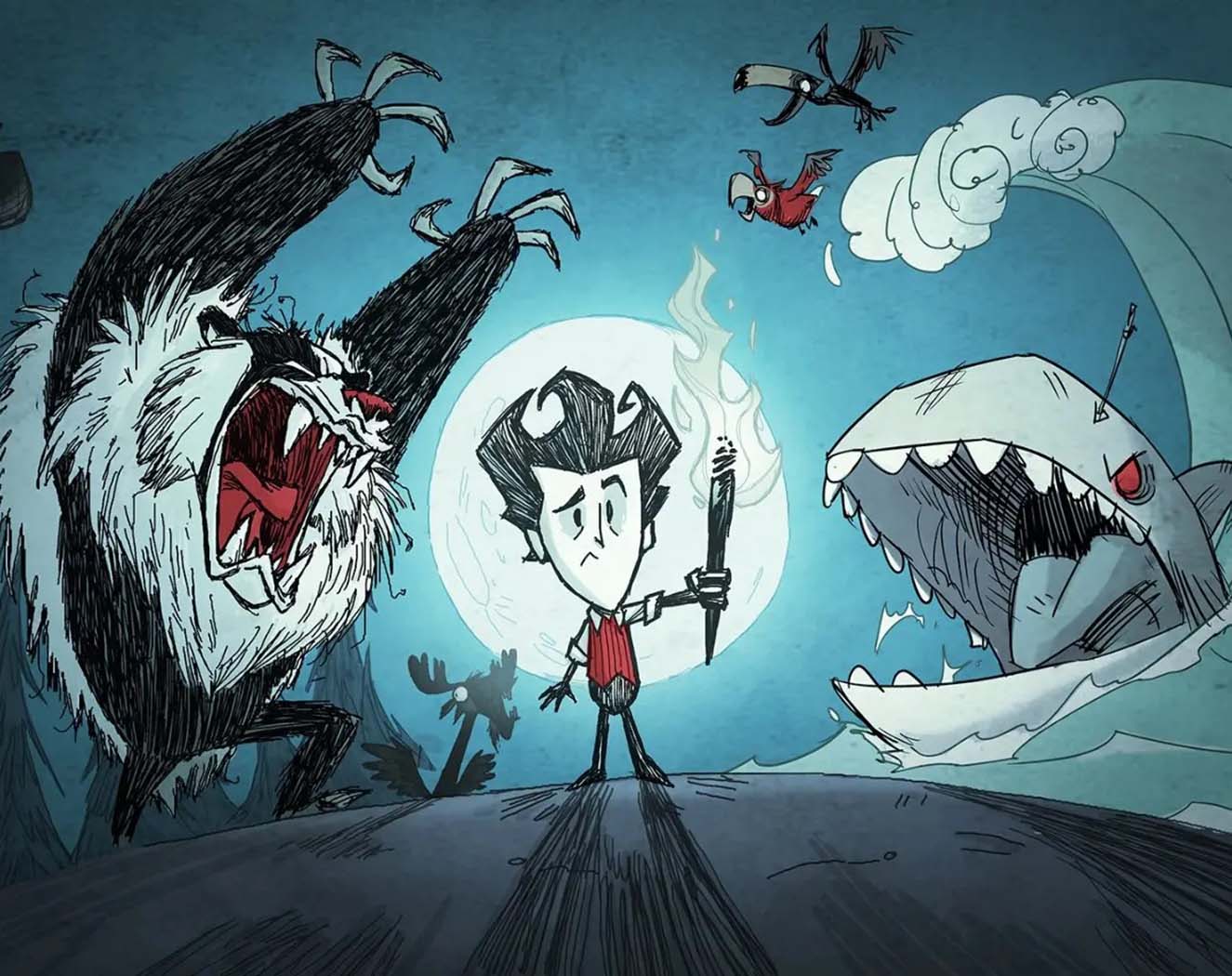
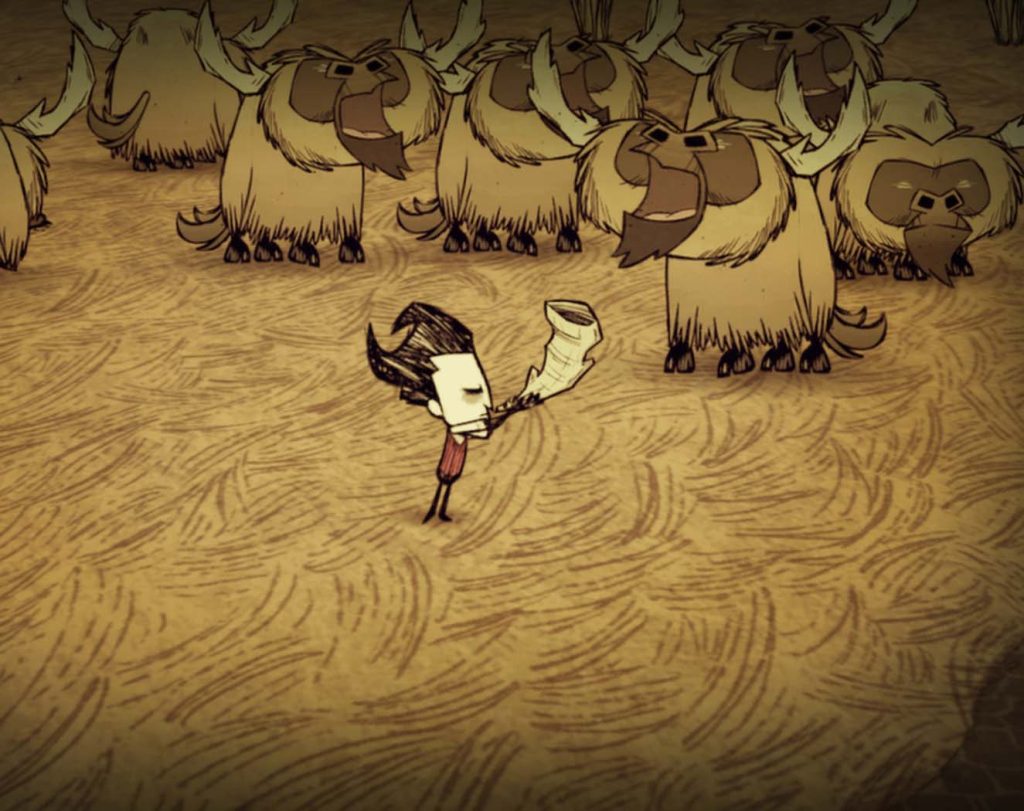
The wilderness hosts various strange and dangerous creatures. Some provide food or resources, while others actively attack me. Learning their habits, behaviors, and attack patterns is critical for survival. Encounters with giant monsters can instantly disrupt my day’s survival plan, forcing me to find victory on the edge of despair. Every battle tests wisdom, reflexes, and strategy.
Sanity and Status Management
Beyond hunger and health, sanity is crucial. Loneliness, darkness, and terrifying events reduce sanity, causing hallucinations and monster appearances. I must maintain sanity through campfires, crafting decorations, caring for small animals, or planning safe resting areas. Properly balancing daytime exploration and nighttime defense is key to surviving and continuing adventures. A mental breakdown can be deadlier than hunger or cold.
In Don’t Starve, every gathering, crafting, and monster encounter is a test of strategy and intelligence. These rich and diverse gameplay mechanics make wilderness survival full of possibilities and immersive—the adventure is always unique.
4. Strategy and Free Exploration
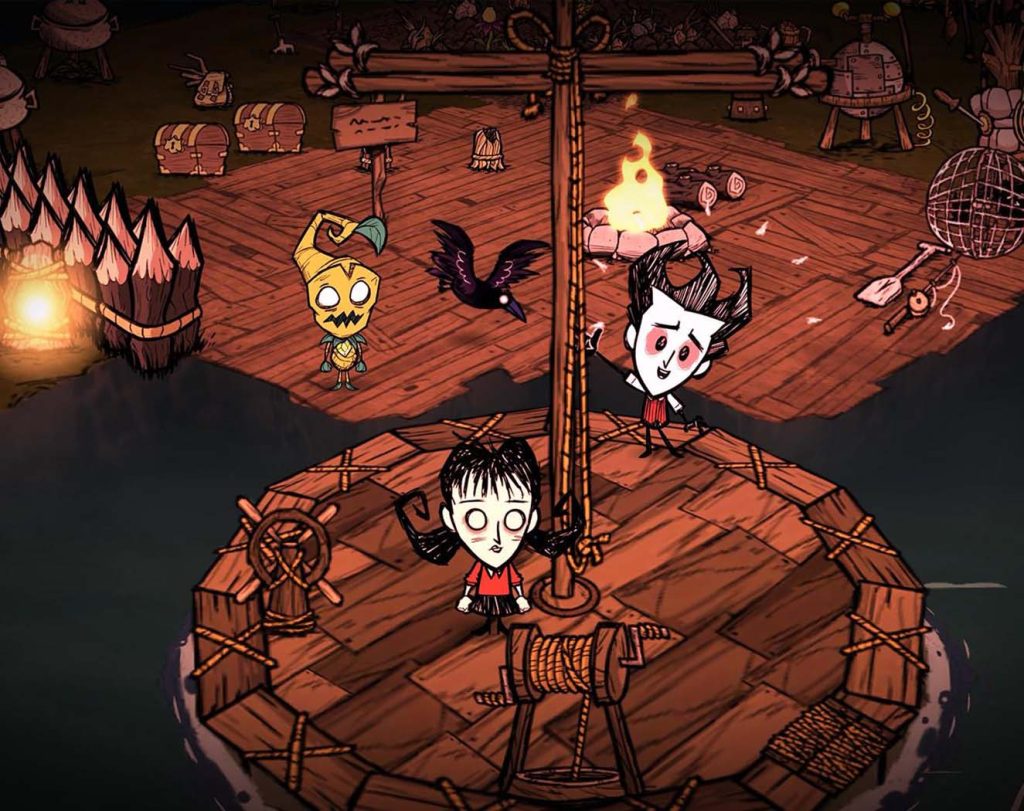
In Don’t Starve, I enjoy unprecedented freedom: I can build a secure base, cultivate farmland, raise animals, or venture into the wilderness to hunt monsters deep in forests or explore the unknown. Each choice carries risk and reward: camping in a resource-rich safe zone guarantees food and materials but may miss rare resources elsewhere; exploring the unknown could uncover powerful equipment or secret caves but also deadly monsters or traps.
Strategy permeates both resource management and combat. At night, I can face monsters head-on to test my skills or cleverly use terrain, traps, and the environment to turn weakness into advantage. Rivers, rocks, and forests can be tools for survival or potential threats.
This combination of freedom and strategy heightens survival pressure: every move, building, or attack requires weighing risks and rewards. It tests judgment and planning, while letting me experience unparalleled adventure thrill—no fixed path, no guaranteed strategy, only courage and intelligence to survive, and exploration to discover surprises.
In Don’t Starve, free exploration and strategic decision-making complement each other, making wilderness survival a test of both physical and mental abilities. Every venture into the unknown, every cleverly set trap, and every life-or-death decision shows the harshness and charm of the wilderness.
5. Visuals and Atmosphere
Don’t Starve features a unique hand-drawn art style with dark aesthetics, perfectly capturing the solitude, mystery, and danger of the wilderness. Every forest, swamp, or hill I traverse has a distinct atmosphere: dry twigs crack underfoot, grass sways in the wind, and distant low monster growls seem ever-present. The day-night cycle fills the world with variation—soft light during the day carries subtle tension, while night darkness envelops everything. Fire becomes the only sanctuary, its flickering light casting shadows that remind me of lurking danger.
Weather further enhances realism and unpredictability. Rain drums on leaves, muddy ground slows movement; gusty winds shake branches, hinting at hidden threats; snow blankets the land, leaving clear tracks that may expose my location. The sounds of wind, rain, distant monsters, and rustling leaves create a tense audio network, making danger palpable visually and aurally.
The hand-drawn style and gloomy atmosphere make the wilderness uniquely charming while amplifying survival pressure. Every glance into distant darkness, every step into unknown grass, every shadow lit by fire makes the adventure tense and mysterious. I feel truly part of the wilderness, and every exploration and decision reflects the environmental challenge and allure.
In Don’t Starve, visuals and atmosphere are not mere decoration—they are core to the survival experience. Every frame, shadow, and sound immerses me in the unknown and thrilling wilderness, blending tension, fear, and curiosity into an ultimate adventure.
6. Platforms and Accessibility
Don’t Starve is available on multiple platforms, allowing me to experience the thrill of wilderness survival on various devices:
PC (Steam / Epic Games)
High-quality graphics and flexible controls allow precise character management, crafting, and strategy. Cross-platform community engagement provides abundant resources and guides.
Consoles (PlayStation 4 / PlayStation 5 / Xbox One / Xbox Series X)
Optimized for controllers, offering smooth operation and immersive large-screen experience. Console players enjoy the full wilderness exploration.
Mobile (Don’t Starve: Pocket Edition)
Touch-screen optimized, allowing survival challenges anywhere. Core mechanics and strategic gameplay are retained for portable adventure.
Cross-platform support enhances convenience and community engagement, letting me share strategies and explore the endless possibilities of the wilderness.
7. The Charm of the Game
The appeal of Don’t Starve lies not only in survival challenges but also in the combination of exploration and strategic freedom. It blends survival intelligence, adventurous spirit, and environmental interaction into a fantastical wilderness, allowing players to experience the tension and thrill of extreme survival.
Every leap into the wilderness, every fire lit, every monster defeated is a self-challenge and a unique memory of the journey. Don’t Starve is more than a game—it is a survival experience about solitude, wisdom, and courage.
Here, every day could be the last, or a new beginning. The wilderness calls, and I will keep exploring the unknown, testing the limits of survival.